Playbook 04 · New / hiring
They have just hired a Head of X, which means they almost certainly need a Head of Y as well. The dependency is real, the buying mindset is already open, and nobody inside the building has named the second seat yet. This playbook is how you name it first.
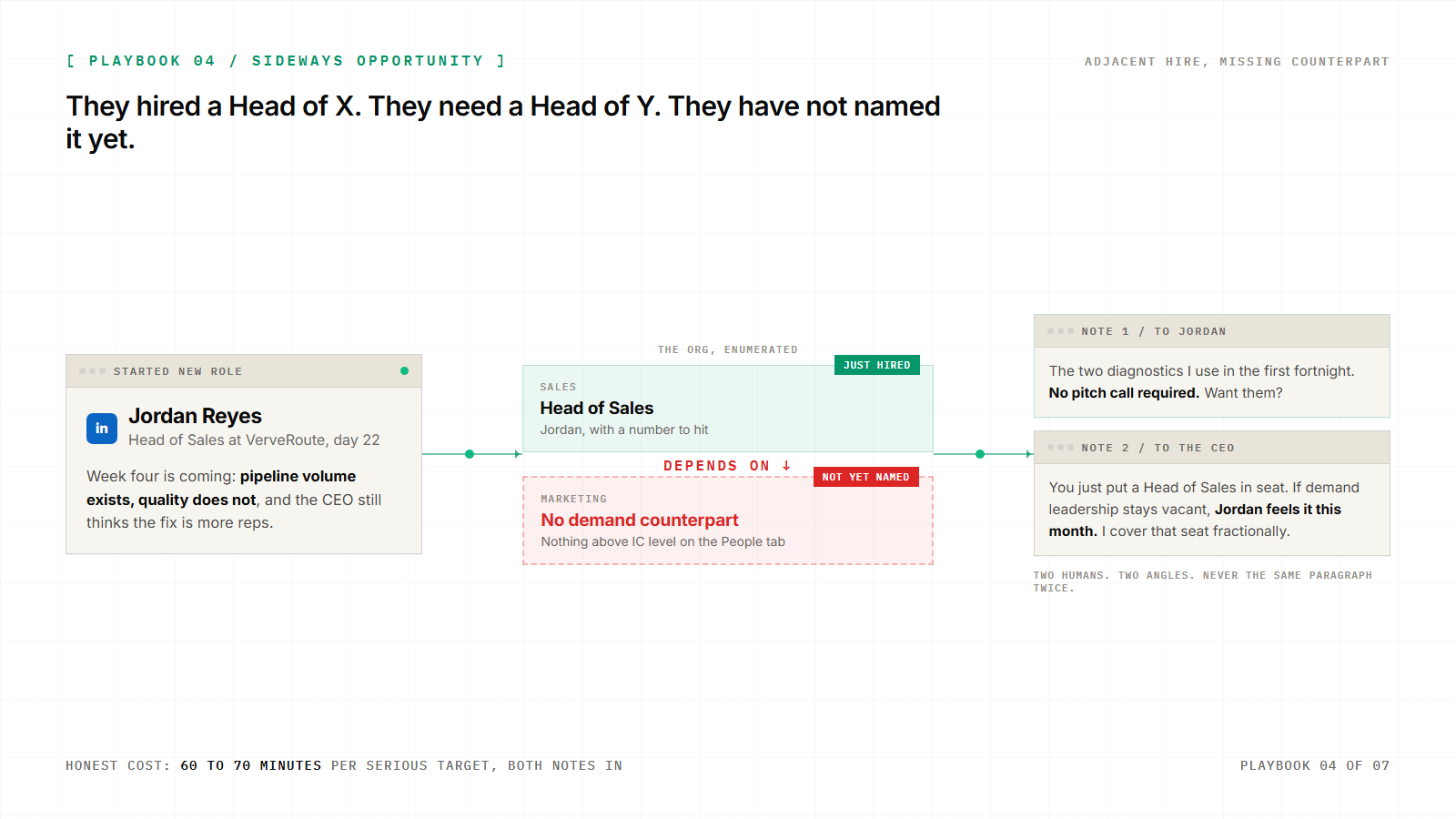
Playbook 04 / adjacent hire, missing counterpart
| Who it targets | The newly hired adjacent leader (primary), and the CEO who approved that hire (secondary). |
| The signal | A recent senior hire in a function that depends on yours, with no senior hire in your function visible on the org. |
| Where it is visible | LinkedIn “started new position” posts, company People tab, Sales Navigator job changes, press or blog hire announcements. |
| Time cost | Heavier than a single-touch hire playbook: two humans, two notes. Budget about 60–70 minutes per serious target once both waterfalls and both drafts are included (the tradecraft pipeline twice over, minus the shared org research). |
Dependency pairs that usually work
A fractional CMO watches for new Heads of Sales, Product, or Customer Success. A fractional CFO watches for new Heads of Operations or People. A fractional COO watches for new commercial leaders who will drown without operating rhythm. Write your own dependency list once. Keep it to three pairs. More than that and you will see signals everywhere and act on none.
How to run it
Step 01: Find the recent adjacent hire.
Monitor job-change signals with the same discipline the tradecraft chapter specifies (Sales Navigator “changed jobs in last 30 days,” or a saved LinkedIn search on your dependency titles). Company size band you serve. Save only hires inside the last month. Older than that and the sideways window is already closing.
Step 02: Check the org chart for your function.
Tradecraft stage 4, the org enumeration. Do they already have a senior version of your seat? If yes, skip. If no, you have found the gap. A Head of Sales cannot operate without demand. A new Head of People cannot fix cost without a finance counterpart who can model it. The CEO usually knows the second hire is coming. They have not scheduled it yet.
Step 03: Reach the leader who just got hired.
Waterfall and send (tradecraft stages 5 and 6). They are two to six weeks in and discovering the function they depend on has no counterpart. You arrive as relief, not as a cold vendor. Speak their problem language: pipeline quality, forecast trust, capacity, ramp, not your service menu.
Step 04: Reach the CEO too, with a different note.
A second contact is allowed here under the tradecraft chapter’s two-seat rule. Different paragraph, same company. They just made one senior hire and know the next is coming. Offer to fill the gap until they are ready for a full-time second seat. Economics: they get more out of the hire they already made, without waiting another quarter for a second search.
What to say
New Head of Sales / day 22 / LinkedIn
Jordan, congrats on the Sales seat at VerveRoute. When I see a first senior sales hire with no marketing counterpart above IC level, the same pattern shows up around week four: pipeline volume exists, quality does not, and the CEO still thinks the fix is more reps.
I run fractional marketing leadership for teams in that exact window. Happy to share the two diagnostics I use in the first fortnight (no pitch call required). Want them?
CEO of the same company / shorter note
Alex, you just put a Head of Sales in seat. If demand leadership is still vacant, Jordan will feel it this month. I cover that seat fractionally for companies your size so the sales hire is not stranded. Twenty minutes if you want the version of this that does not wait for another full-time search.
How this playbook fails
- You invent a dependency that is not real for that business model.
- You only message the CEO and ignore the new leader who feels the pain first.
- You wait until month four to protect your status, and the temporary vendor is already chosen.
- You pitch both people with identical copy, which makes you look like a sequence, not a peer. They compare notes.